Plumbing problems rarely arrive at a convenient moment: a water heater fails before guests land, a villa’s pump gives up in August, or a slow leak quietly damages a bathroom cabinet for months. Understanding how plumbing work in Dubai is organised — the common services, what drives the price, and which jobs are safe to attempt yourself — helps you respond calmly instead of paying emergency rates for routine work. This guide is written for tenants, landlords and homeowners across the Emirates.
Common Plumbing Work in Dubai Homes
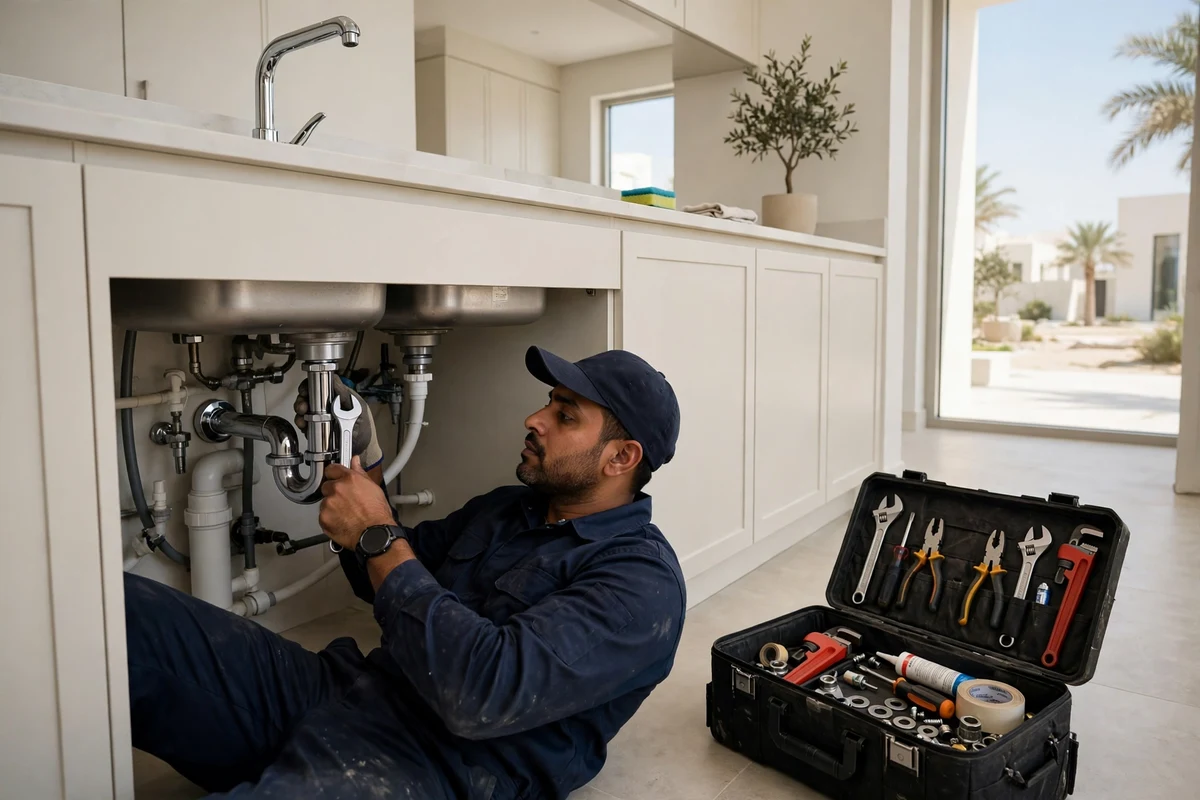
Day-to-day plumbing work in Dubai falls into a few repeatable categories. Leak detection and repair tops the list, from dripping taps and running toilets to hidden pipe leaks that show up as damp patches or a sudden jump in the water bill. Blocked drains and toilets are the second staple, especially in older buildings where kitchen grease and bathroom scale build up over years. Water heater installation and replacement is constant work in the UAE, since storage heaters in ceiling voids work hard against very hot incoming water in summer.
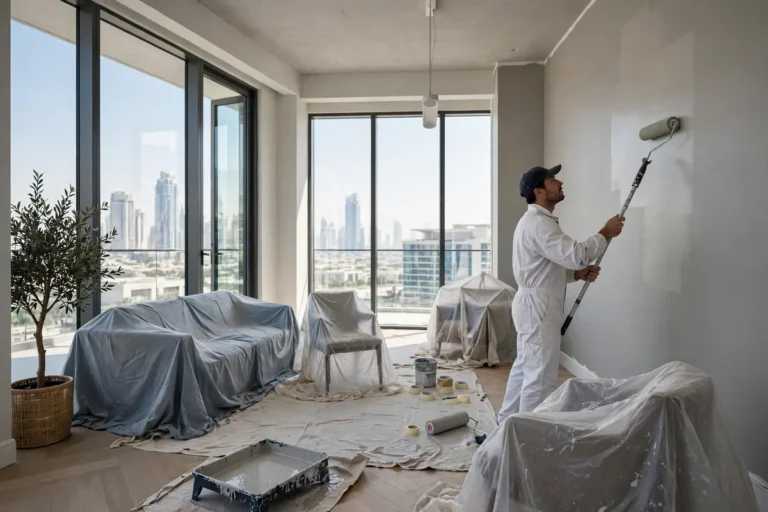
Beyond repairs, plumbers handle bathroom and kitchen fitting — mixers, showers, bidet sprays, sinks and sanitary ware — plus water pump and tank work in villas, where booster pumps and rooftop tanks are part of everyday life. Many of these jobs surface during a wider property refresh, which is why they are often sequenced with the trades described in our home renovation in Dubai guide rather than handled one emergency at a time.
What Affects the Cost of Plumbing in Dubai
As with most home services in the Emirates, there is no honest flat price for plumbing: the bill reflects the job. The main factors are the type of work (a tap cartridge is not a re-pipe), access — a heater buried in a sealed ceiling costs more to reach than one in a utility room — the brand and quality of replacement parts, and whether the visit is a scheduled appointment or an emergency call-out at night or on a weekend.
Ask for the pricing structure before work begins: call-out fee, hourly or fixed job rate, and parts charged separately or included. A written quote matters most for larger work such as bathroom refits, pump replacement or leak investigation, where the scope can grow once walls or ceilings are opened. Landlords and tenants should also confirm who pays: tenancy contracts in Dubai commonly make the landlord responsible for major maintenance and the tenant for minor items below a stated amount, so check your contract before authorising repairs. The same contract-first thinking recommended in our guide to hiring a maintenance company in Sharjah will save arguments later.
Building Rules, Access and Approvals
Dubai’s towers and communities run on paperwork. Most buildings require the plumbing company to be registered with building management, and noisy or water-shut-off work usually needs advance notice so the supply can be isolated without affecting neighbours. Shutting off water to a stack or a villa cluster is coordinated, not improvised — a good plumber will handle the facility management communication for you.
Inside the home, water quality shapes plumbing choices. Dubai’s desalinated supply is treated but can still carry scale, and sediment from rooftop tanks affects heaters and mixers; filters and regular tank cleaning are part of sensible upkeep, which overlaps with the hygiene routines covered in our guide to kitchen deep cleaning in Dubai. If your home help manages day-to-day cleaning and basic checks, make sure responsibilities are clear — our overview of the household maid in the UAE explains how households usually divide these tasks.
Jobs You Can Do Yourself — and Jobs to Leave to a Pro
Confident homeowners can handle a short list safely: replacing a shower head or bidet spray, unblocking a sink with a plunger or drain snake, changing a tap’s aerator, and resetting a tripped water heater. Keep a plunger, adjustable wrench, PTFE tape and a bucket in the house; they resolve a surprising share of minor issues. Take a photo before you dismantle anything, and close the nearest isolation valve before you start.
Everything else belongs to a professional: anything inside walls or ceilings, gas-adjacent work, water heater electrical connections, main-line blockages, pump faults and any leak you cannot fully see. Water damage spreads invisibly — a slow drip inside a wall can rot cabinetry and feed mould for months. If the problem recurs after a simple fix, that is the signal to stop and call a plumber rather than escalate your own repairs. Households that prefer one point of contact often fold these call-outs into an annual maintenance contract, which the move-in planning in our residential cleaning services guide touches on as part of settling into a new home.
How to Choose a Plumber in Dubai
Choose a company, not just a phone number. A licensed plumbing or maintenance company with a trade licence, uniformed technicians and a landline or office you can call back is a safer bet than an anonymous advert. Check recent reviews with specifics — punctuality, cleanliness, whether the fix lasted — and ask what guarantee the work carries; reputable firms warranty their labour for a defined period.
Agree the scope in writing for anything beyond a simple repair, confirm whether parts are supplied by the company (and which brand), and keep invoices: they matter for landlords, warranty claims and future buyers. If you are storing furniture or belongings while major bathroom work is done, short-term options in our guide to self-storage facilities in Dubai can keep the work area clear and the job faster.
Preventive Plumbing Maintenance for UAE Homes
Most emergency plumbing work in Dubai is preventable with light, regular attention. Check under sinks and around water heaters every few months for damp or corrosion. Run rarely used taps and showers briefly to keep traps filled and drains fresh. Have rooftop tanks and pumps inspected on a schedule if you live in a villa, and service water heaters before summer, when they work hardest. Keep grease out of kitchen drains, fit simple hair catchers in showers, and know exactly where your main water shut-off valve is — and tell everyone in the household.
Your utility bill is an early-warning system. A DEWA water bill that climbs while your household habits stay the same usually means a leak somewhere — a running toilet cistern, a heater valve or a pipe inside a wall. Plumbers can confirm with pressure testing and moisture meters rather than guesswork, and finding the leak early is far cheaper than repairing the damage it causes. Smart leak detectors and automatic shut-off valves are also becoming common in renovated villas; fitted near the main line, they alert your phone and can stop the flow before a burst pipe floods a room.
A plumber who knows your home is worth more than a directory of numbers. Build the relationship during a small, unhurried job, keep the paperwork, and the next time water appears where it should not, you will already know exactly who to call.